

Stories that built the Campus
The Campus for Future Living started as an idea on a piece of paper. Now, after one year of operating, it has become a vital community hub for connection, education, health and an award-winning cafe! These are our people and their stories...

01
From a seed to a centre of the community: Campus for Future Living
By Claire Woodward, Director of Community Investment, Acis Group
It’s hard to imagine now, standing in a building full of energy and purpose, that the Campus for Future Living in Mablethorpe began life as little more than a line on a page.
“How did it all start? It started from a piece of paper that someone passed in 2022, is the honest answer,” Claire Woodward, Acis Group’s Director of Community Investment recalls.
Back then, the idea barely had shape. Clip, Acis’s education and wellbeing service, had just joined the Group, and conversations about its future growth were in full flow.
Among a list of possibilities was this vague, half-understood “campus” on the Lincolnshire coast - intriguing, but distant. Something to keep an eye on, perhaps.
But life moved on, priorities shifted, and the idea quietly slipped into the background.
It took a visit to bring it back into focus.
Walking through the newly-built centre for the first time, and hearing the emerging vision from East Lindsey District Council, Claire and her team began to see the potential – even though the building was an empty shell at that time.
What had once been abstract suddenly felt tangible and full of promise.
“It wasn’t about being an operator, it was about actually asking ‘what can we do to help Mablethorpe thrive’,” Claire said.
That shared sense of purpose became the foundation for everything that followed.
Acis and East Lindsey District Council – who funded the construction and developed the original vision - weren’t just looking to fill a building.
They wanted to create something meaningful, impactful and a new heartbeat for a community struggling with the challenges faced by so many rural towns.
They shared a vision for supporting local people, strengthening connections and opening up new possibilities for the future.
Out of that ambition, a partnership took shape. Not always smoothly, and certainly not quickly, but with a growing sense of trust and direction.
“What emerged was a really strong partnership that came from a place of equality,” Claire explains.
Together, they began to define what the campus could be - a place for research and innovation, rooted in community. A place where education, health and opportunity could sit side-by-side. Crucially, they had to find a way to make it work.
When the doors opened, expectations were deliberately modest. In the first year, the initial hope was simply that people would come in, start conversations, maybe grab a coffee and begin to make the space their own.
A year on, the reality has far surpassed those early ambitions.
Claire explained: “What I’m really proud of is the number of people from the local community that comes through that door every day… they come for a real purpose and they get a sense of belonging, a sense of security there.”
That sense of belonging is now woven into the fabric of the building.
It’s heard in the conversations happening over coffee in the Wayfinder Cafe, it’s seen in the projects and activities evolving in the various community spaces, and its felt in the growing number of local people who see the campus as a place for them.
From IDEA labs to community-led discussions, residents are helping to define what comes next - even driving plans for the land surrounding the campus.
It’s an approach that feels as ambitious as it does grounded. Because ambition, for Claire, has always been part of the story.
When she talks about what’s still to come, she paints a vivid picture: a rooftop veranda, a canopy overhead, people gathered together with a sense of pride with maybe even a glass of champagne in hand.
It’s a small detail, but a powerful one. A reminder that this is about more than bricks and mortar; it’s about creating something worth celebrating.
“What started as a nugget of a seed is now growing, and actually we’ll have a whole forest eventually.”
And in Mablethorpe, that forest of hope and opportunity is already beginning to take root.
02
Community Garden Blossoms in Mablethorpe
.jpg)
At the heart of Campus, a once-empty space has been transformed into something far more than a garden.
A patch of land has become a place where people grow food, confidence, friendships and a cultivate a real sense of belonging.
Launched in September 2025, with support from East Lindsey District Council, the community garden has quickly flourished into a vibrant hub for learning, wellbeing and connection.
Designed to be free, inclusive and shaped by the people who use it, the project reflects the very ethos of the Campus - putting community first.
From the earliest days, local residents have quite literally helped build the project from the ground up. Volunteers have constructed raised beds, planted donated bulbs and taken part in hands-on horticultural workshops.
The first plants have already grown and vegetables grown there have already been served to customers at the Campus’ Wayfinder Cafe – a powerful symbol of what collective effort can achieve.
Emma Tayler, Manager of the Campus for Future Living, says the garden captures the spirit of the wider project.
“I’m so proud to see how the community has come together to bring our garden to life,” she said. “People have shared how their confidence has grown, how they’ve formed new friendships and how they feel a real sense of belonging here.
“Seeing people learn new skills, support each other and take pride in something they’ve helped create really captures what the Campus is all about.”
The initiative was supported by £17,782 from the UK Shared Prosperity Fund via East Lindsey District Council. For Councillor William Gray, Portfolio Holder for Communities and Better Ageing, the garden is a clear example of how community-led investment can deliver lasting benefits.
“It is fantastic to see the garden flourishing and bringing people together to support their wellbeing,” he said. “The funding has been used to help people learn new skills while enhancing both physical and mental health.
“The Campus for Future Living is about connecting people with the opportunities and services they need to live well, and the community garden is a strong example of that.”
For those taking part, the impact has been immediate and deeply personal. Many describe the sessions as a highlight of their week and something to look forward to.
Participants speak of improved mental health, increased physical activity and a renewed sense of purpose.
One attendee said the workshops had “a positive impact on my mental health and encouraged me to be more physically active,” while another said that learning about nature and growing food “lifted my spirits.”
Sustainability is woven into the fabric of the project. Organic waste from the Wayfinder Café - including coffee grounds and tea bags - is composted and reused in the garden, creating a closed-loop system that minimises waste.
The garden’s success has also been shaped by collaboration. Partners including Mablethorpe Men’s Shed, learners from Clip and Lincolnshire Outdoor Learning have worked alongside tutors, volunteers and learners to support activities and expand opportunities for those involved.
As it continues to grow, the garden remains open as a free, bookable space for local groups - ensuring it stays rooted in community ownership. Plans are already in place to welcome more visitors, including a Community Garden Open Day on 26 June, offering a chance for others to see its impact first-hand.
In a town where connection and opportunity are key to shaping future wellbeing, the community garden stands as a living, growing example of what’s possible when people come together.
The Campus Community Garden is nurturing a stronger, healthier community.

03
Shared ambition, big impact – how the campus is tackling coastal community challenges
By Cllr William Gray, Portfolio Holder for Communities and Better Ageing at East Lindsey District Council.
The Campus for Future Living was born from a shared ambition between East Lindsey District Council and its partners to tackle a range of interconnected challenges facing coastal communities.
Residents in places such as Mablethorpe often experience poorer health outcomes and reduced access to essential services, largely due to their geographic location and limited transport links. These barriers can result in increased isolation and difficulty accessing healthcare, employment opportunities, and vital community support.
To address these issues, the Council developed a robust business case in partnership with the Connected Coast Board, successfully securing Government funding to create a transformative facility.
The Campus for Future Living was established to bring services, partners, and opportunities together in one accessible location, with the aim of improving health and wellbeing while supporting economic growth.
One year on from opening, the Campus is delivering on that vision. It has become a vibrant hub for learning, support, and collaboration, offering residents access to a wide range of services and opportunities in a single, welcoming space.
Research delivered through the Lincoln Institute for Rural and Coastal Health is also helping to deepen understanding of coastal health inequalities, ensuring that local challenges are addressed with evidence-based solutions.
The Campus plays an important role in supporting skills development, education, and employment pathways. Its strategic location, alongside key services such as the children’s centre and Marisco Medical Practice, enhances accessibility while reinforcing its role at the heart of the community. Increasingly, it is being recognised as a leading example of coastal innovation.
Partnership working is central to the Campus’ success. Through funding from the East Lindsey Investment Fund, monthly Digital and Community Drop-ins are held to provide residents with access to trusted, practical advice. Lincs Digital attends to provide guidance on everyday technology, help resolve online issues, promote online safety and security, and support people to access online health services.
These sessions are organised around key themes, bringing together a variety of organisations to provide joined-up support. For example, a recent Home and Independent Living session included partners such as Good Home Lincs, the HEART Team, Anglian Water, Age UK, the Fire Service’s SHERMAN campaign, and the Lindsey Blind Society. Residents were able to learn about cost-saving measures, explore ways to adapt their homes to remain independent, and self-refer for additional support.
Other themed sessions have addressed Memory and Care, with organisations including LIVES, St Barnabas, Carer’s First, and Bob’s Brainwaves supporting individuals and families navigating memory-related challenges. Additional activities have included seated exercise sessions and seasonal wellbeing advice, helping people maintain their health throughout the year.
Crucially, the Campus provides a trusted environment where residents can engage with reputable organisations, building confidence and enabling meaningful connections.
The Campus has also become a key venue for East Lindsey’s Age-friendly Ambassadors. As part of the district’s commitment to being an age-friendly community, these volunteers promote positive ageing and help shape local initiatives.
The Campus has played a vital role in bringing ambassadors together, supporting collaboration, and reinforcing a shared vision of inclusive, supportive communities for all.
04
A Space Transformed to Celebrate Lincolnshire’s Inspiring People

On an otherwise ordinary evening in March, something quietly remarkable happened at the Campus for Future Living.
The centre’s spacious conference room, usually a home for meetings and training sessions, was transformed into a glitterng awards hall filled with applause, emotion and inspirational stories.
The occasion was Acis Group’s first-ever Inspiring Futures Awards, held on 18 March. For those attending, it wasn’t just another event in the calendar. It was a chance to pause and recognise people whose achievements don’t always make headlines, but whose impact is felt every day in their communities.
Chairs were rearranged, lighting softened, and the familiar conference setting took on a new atmosphere.
Guests from across Clip, Riverside Training, Skills Centre Plus, Abbey Access Training and Acis Students gathered to celebrate people who had overcome barriers, supported others or simply refused to give up when things got tough.
Greg Bacon, Chief Executive of Acis Group, summed up the mood of the evening.
“It was a real privilege to bring everyone together to celebrate these individuals,” he said. “Many of them have achieved things they once thought were out of reach.
“These are the stories that remind us why we’re here - working in communities, providing homes, education, skills and support when people need it most.”
Throughout the evening, ten awards were presented, each one telling a different story.
Some spoke of long-standing dedication. Barbara Hancock, named Wellbeing Champion, has spent more than 30 years supporting others. Since joining Clip, she has rebuilt her own learning journey, gaining qualifications, a Master’s degree and becoming a Mental
Health First Aid trainer all while helping shape wellbeing services across the organisation.
Others highlighted the importance of partnership. Linda Wilcox, awarded Partner of the Year, was recognised for her work locally in Mablethorpe through the LN12 Project. Known for her steady support and practical advice, she has become a familiar and trusted presence for many learners.
There were also stories of growth and second chances. Bill Marston, who received the Vocational Excellence award for young people, had struggled in mainstream education before finding his confidence in a more supportive setting. Now, he’s not only thriving but helping others to do the same.
Eve Overton’s award as Community Champion reflected something similar - a willingness to step forward and make things better for those around her. As a student, she saw opportunities to improve life for her peers and simply got on with it.
Some of the most powerful moments came from those who had faced significant personal challenges. Zoe Byrne, winner of the Resilience Award, is rebuilding her life while working towards a future career in radiology. Her determination - and honesty about the hurdles she has faced - left a lasting impression on the room.
Then there was Cameron May, recognised for his progress through Skills Centre Plus. Once quiet and hesitant, he has found confidence through photography, developing both his skills and his ambition along the way.
As each name was read out and each story shared, the space itself seemed to shift. The Campus - designed to support learning, wellbeing and connection - was doing exactly that, just in a different way.
For one night, it became a place not of starting journeys, but of recognising how far people had come.
The transformation of a simple conference facility showed what the Campus for Future Living is capable of - adapting to what people need, creating space for connection, and, when the moment calls for it, putting a spotlight on the people who make a difference.
.jpg)


05
A Year of Impact: LIRCH at Campus
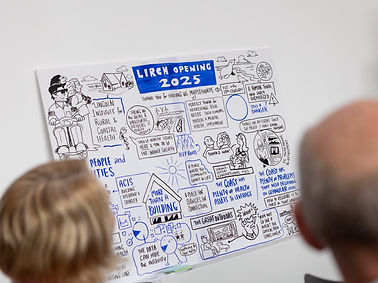
Over the past year, the Lincoln Institute for Rural and Coastal Health (LIRCH) has played a pivotal role in bringing research, community insight and collaboration to life at the Campus for Future Living.
As the UK’s first dedicated institute of its kind, LIRCH is driven by a clear ambition: to tackle the deep-rooted health inequalities experienced by rural and coastal communities and deliver solutions that truly make a difference.
Supported by a £10.9 million UK Research and Innovation grant, LIRCH brings together expertise spanning mental health, cancer care, infectious diseases, oral health, digital innovation and community-led research.
Ranbir Jabanda, Policy, Impact and Engagement Officer at LIRCH, said: “LIRCH and the Campus both share a commitment to ensuring the diverse voices of local communities are heard.
“By breaking down silos and working together, we can build resilient, proactive rural and coastal communities that deserve representation in research, policy, decision-making, service provision and advocacy.
“We look forward to seeing our community engagement efforts in Mablethorpe grow, building trust with the local community and listening to individual and collective lived experiences.
“By having a local focus, this will increase participation, empower residents, and help to tailor recommendations and solutions."
Its mission is grounded in partnership – working closely with local people, service providers and organisations to ensure research is shaped by real-world experience.
This commitment to co-production was evident from the outset.
In May 2025, LIRCH helped mark the beginning of activity at the Campus for Future Living with its inaugural World Café event. Bringing together more than 35 participants – including residents, researchers and policymakers – the session explored the lived experiences of people facing extreme isolation and loneliness, often described as the ‘People Nobody Knows’.
The insights generated are already informing discussions with local authorities, ensuring that voices from the community directly influence future service design.
Momentum continued to build throughout the year. The official launch of LIRCH at the campus in June 2025 welcomed around 100 guests, cementing Mablethorpe’s role as a national hub for rural and coastal health innovation. Further engagement followed, including a second World Café focused on care home research, and a growing programme of workshops and collaborative events.
By early 2026, LIRCH’s presence had deepened further, with Community Researchers using the campus as a base for engagement and outreach. The campus also featured as a key destination during LIRCH’s ‘Road Trips’ programme, extending the reach of its inaugural conference and showcasing local work to wider audiences.
At the heart of this success is a strong and evolving partnership. LIRCH and the Campus for Future Living share a commitment to collaboration, with joint working across community engagement, co-production and wellbeing initiatives.
With shared expertise, cross-board representation and a growing programme of activity, the relationship continues to strengthen.
As LIRCH looks ahead, the past year at Mablethorpe stands as a powerful example of what can be achieved when research, community and place come together – creating healthier futures for rural and coastal communities, both locally and beyond.


06
“It gave me a kickstart to look at myself again”
Marian’s journey to health, confidence and connection at the Campus for Future Living

At 67, Marian Reilly isn’t afraid of a challenge.
After a busy career managing IT services across London and beyond, retirement should have been a chance to slow down. But for Marian, it brought something unexpected.
“You think it’s lovely at first,” she said. “But after a while, you realise you’ve lost that structure. You sleep a bit longer, you’re not as active … and before you know it, things start to creep in.
“I found I was getting up later and eating more just for something to do.”
Over time, Marian noticed the change. She felt less fit, less motivated and her weight began to rise.
“I put on four stone,” she explained. “I was huffing and puffing walking round the shops. I just thought, I can’t keep going like this.”
It was a simple moment that changed everything.
A poster on a community noticeboard in her local Co-Op caught her eye. A new health group – One You Lincolnshire - starting at the Campus for Future Living in Mablethorpe.
“I saw it there, then it popped up on Facebook as well,” she laughs. “I thought maybe this is meant to be.”
A different kind of support
From the moment Marian stepped into the Campus, she realised this wasn’t like anything she’d tried before.
“It’s not about being judged or compared to others,” she said. “I’d tried other groups years ago and it felt like you were being called out. That’s not what this is.”
Instead, the small group – just seven people – quickly became something else entirely.
“We’ve really gelled. We support each other, we laugh together. It’s a lovely atmosphere.”
Led by a friendly and encouraging group leader, sessions focus on practical, everyday changes from understanding food labels to rethinking habits.
“It’s taught me something really important – no food is ‘bad’,” Marian said. “If you want a piece of cake, have it. Just balance it. Don’t punish yourself.”
For Marian, that shift in mindset has been just as powerful as any number on the scales.
Small steps, big changes
What started as a weekly group has sparked wider changes in Marian’s life.
She now goes to the gym three times a week – something she hadn’t done in years.
“It took a lot to walk through that door again,” she admits. “But everyone’s so friendly. Nobody’s judging you – you just get on with your own thing.”
Six weeks in, the results spoke for themselves.
“I’d lost twelve pounds of fat and gained four pounds of muscle,” she said. “I was quite embarrassed when they announced it to everyone – but secretly, I was pleased!”
Nine weeks into the programme, Marian has lost nine pounds overall and is already seeing a difference in how she feels and moves.
“My shape’s changed. I’ve lost an inch off my waist,” she beamed. But more importantly, her habits have changed.
Whether it’s checking food labels, planning meals or even taking a homemade salad to a classic car show instead of reaching for fast food, Marian is making choices that feel realistic – and sustainable.
A place that makes change possible
For Marian, the Campus for Future Living has been a catalyst for her change.
“It’s an excellent site – it’s all new, welcoming, and there’s so much going on,” she said. “I didn’t know they ran other groups but I’ve had a look and there are a few others I’d quite like to join.”
Having a local, accessible space offering joined-up services has made it easier to take that first step and, crucially, keep going.
Looking ahead
So what’s next For Marian? This isn’t about quick fixes. It’s about lasting change.
“It’s given me that kickstart,” she said. “I’m more mindful now – of what I eat, how I move, how I look after myself.”
And perhaps most importantly, she’s found something else along the way: connection.
“It’s not just about weight loss,” she explained. “It’s the people, the support, the encouragement. That’s what keeps you going.”